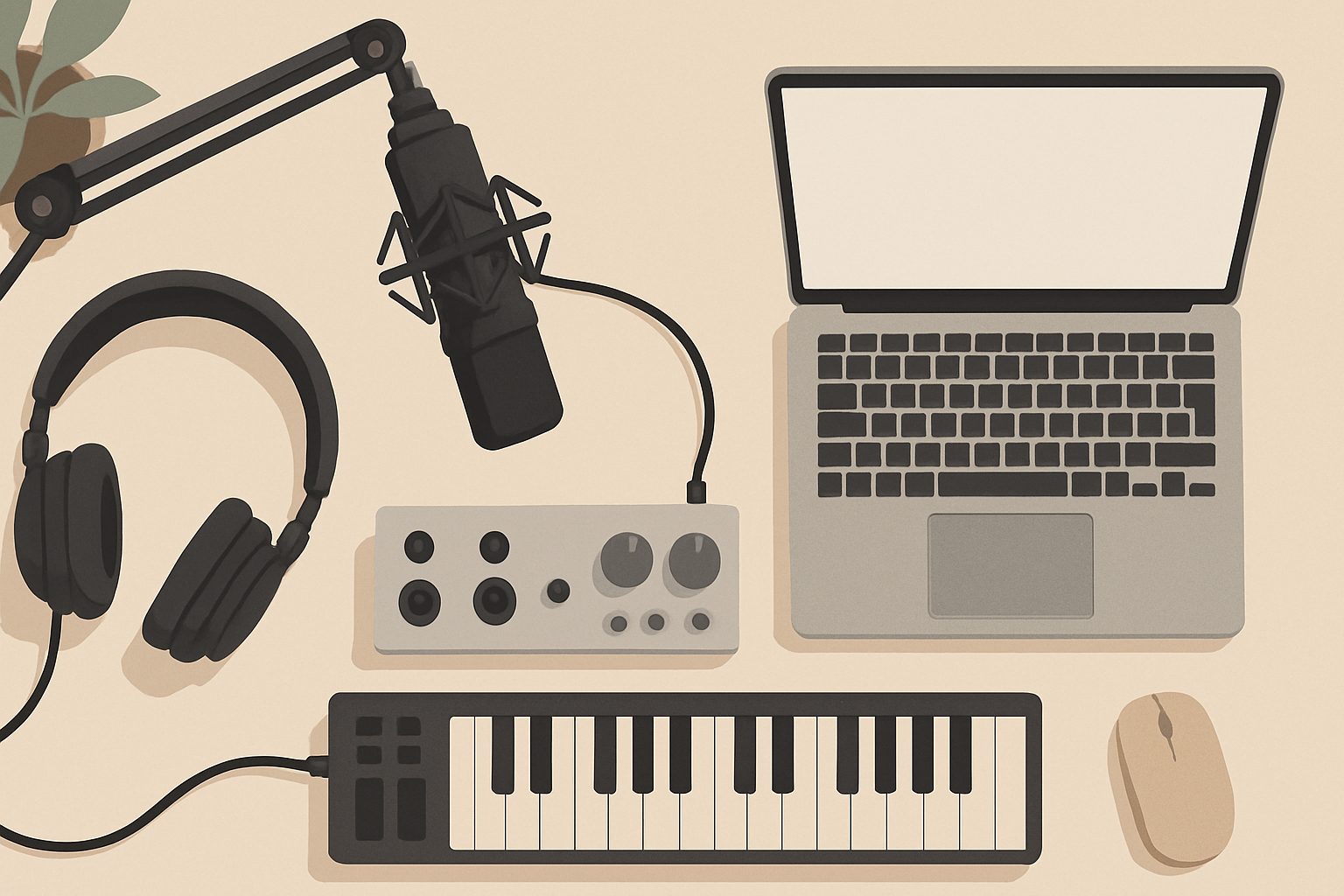
How to Choose a Condenser Microphone for Vocals UK: What Actually Matters
If you're setting up a home recording studio in the UK, a condenser microphone is almost certainly on your shopping list. They're sensitive, they capture detail, and they're the de facto standard for vocals in everything from bedroom pop to podcasting. But "condenser mic" is a broad category, and picking the right one means understanding what specs actually affect your recordings—not just chasing brand names or price tags.
Why Condenser Microphones for Vocals?
Condenser mics work by using a charged capacitor suspended above a backplate. When sound waves hit the diaphragm, capacitance changes, and that shift gets converted into an electrical signal. The result is higher sensitivity than dynamic mics, which means they pick up vocal nuance—breath, presence, tone—more faithfully. They're also typically more affordable than quality dynamics, which matters when you're outfitting a home studio on a budget.
That sensitivity is also why choosing carefully matters. A microphone that's brilliant for a professional booth with acoustic treatment can be utterly unusable in a room with road noise, heating pipes, or a housemate in the next room.
Polar Patterns: The Foundation of Your Choice
Every microphone has a polar pattern—a map of where it's sensitive and where it's not. This is the most important spec you need to understand.
Cardioid is the most common pattern for home studios. It's sensitive in front and sides, with rejection at the rear. This means you can place the mic close to your mouth, get a present vocal sound, and reject some room noise. In an untreated home space, cardioid rejection helps. You're not picking up reflections from every direction.
Omnidirectional mics pick up equally from all directions. This is terrible for home recording. It'll capture your radiator, your neighbour's dog, and the hum of your computer with the same enthusiasm it captures your vocals. Avoid these unless you're using them in a genuinely treated room—which most home studios aren't.
Supercardioid and hypercardioid patterns are tighter than standard cardioid. They give you more isolation from room sound, but they have rear-lobe sensitivity. This can actually bite you if something reflective is behind the mic. They also require more careful off-axis mic technique. In a home studio, a good cardioid will serve you better unless you're in an exceptionally noisy environment.
Self-Noise: The Spec That Matters More Than You Think
Self-noise—also called the noise floor—is how much hiss a microphone generates on its own, independent of the sound it's recording. It's measured in dB-A (A-weighted decibels), and lower is always better.
Budget mics often spec 16–18 dB-A. Mid-range mics land around 12–14 dB-A. Professional mics sit at 8–12 dB-A. This might not sound like a huge difference until you record vocals at a normal speaking level and then try to mix it. A noisy microphone means you'll fight hiss in the quiet bits, you'll gate more aggressively, and you'll spend more time noise-gating in post-production.
In a home studio, self-noise becomes especially important because you're often recording softer sources or in more ambient rooms than a professional would. Look for specs under 14 dB-A if you want clean vocal tracks without excessive noise-gating.
SPL: Understanding Where Headroom Gets Tight
SPL stands for sound pressure level, and it's the maximum volume a microphone can handle before it distorts. Most condensers spec this as "maximum SPL at 1% THD" (total harmonic distortion). Typical figures range from 120 dB to 140 dB SPL.
For vocals, this matters less than for drums or loud instruments, but it's not irrelevant. If you like to sing loud, or you record screamo or metal vocals, you need headroom. Many budget condensers max out at 120–125 dB SPL, which can clip if you're belting. Spend slightly more and you'll find 130+ dB SPL specs. That gives you room to perform naturally without worrying about hitting the ceiling.
Most home vocal recording won't push these limits, but if you're recording anything with dynamic range—pop, rock, spoken word—it's worth having more SPL than you need.
Diaphragm Size and Presence
Condenser mics come in standard 1-inch (large diaphragm) or smaller 0.5-inch sizes. Large-diaphragm condensers are the vocal standard. They tend to have a presence peak in the upper-mid range (around 4–5 kHz), which adds clarity and helps vocals cut through a mix. Smaller condensers are flatter and less colourful.
For vocals, large-diaphragm is the conventional choice for good reason. But "conventional" also means there's a lot of snake oil. Some large-diaphragm mics have brutal presence peaks that make everything sound harsh. Others are woolly and dark. Listen to demos before committing.
Polar Pattern, Isolation, and Your Room
A cardioid condenser does more for isolation than any EQ will fix later. In a home space with noise from outside, heating, computers, or housemates, proximity effect (proximity to the mic, not proximity to noise) actually helps you. Sing closer to the mic, and two things happen: bass naturally increases slightly (proximity effect), and the mic rejects more room noise. This is why broadcast and recording vocals favour close miking.
If your room is genuinely quiet and acoustically treated, you can afford to be more distant and rely on the mic's pattern. If you're recording in a bedroom with single-glazed windows and a boiler, a cardioid pattern with good rejection becomes essential.
What You Actually Need to Do
Before you buy, know your self-noise target (below 14 dB-A), confirm the polar pattern is cardioid, check that SPL gives you headroom, and listen to demos of recordings in similar spaces to yours. Ignore forum posts that tell you brand X is "the only choice"—real choice depends on your room, your voice, and your budget.
The right condenser for your home studio is one that isolates room noise without colouring your vocals unbearably, and that doesn't force you to noise-gate your breath and presence.
Ready to find the right mic for your vocal setup? We've tested the best condenser microphones for home studios across the UK market—from budget-friendly options to professional standards. Check out our full roundup to hear comparisons and detailed reviews.
More options
- Focusrite Scarlett Series Audio Interfaces (Amazon UK)
- Yamaha & Adam Audio Studio Monitors (Amazon UK)
- Audio-Technica & Rode Condenser Microphones (Amazon UK)
- Acoustic Foam Treatment Panels (Amazon UK)
- Arturia & Akai MIDI Keyboards and Controllers (Amazon UK)