Best Budget Home Recording Studio Setup Under £500 UK 2025
You don't need to spend thousands to record decent vocals, instruments, or voiceovers at home. A proper budget setup—interface, microphone, headphones, and stand—genuinely works under £500. The catch: you need to prioritise the right things and skip the expensive myths.
What You Actually Need
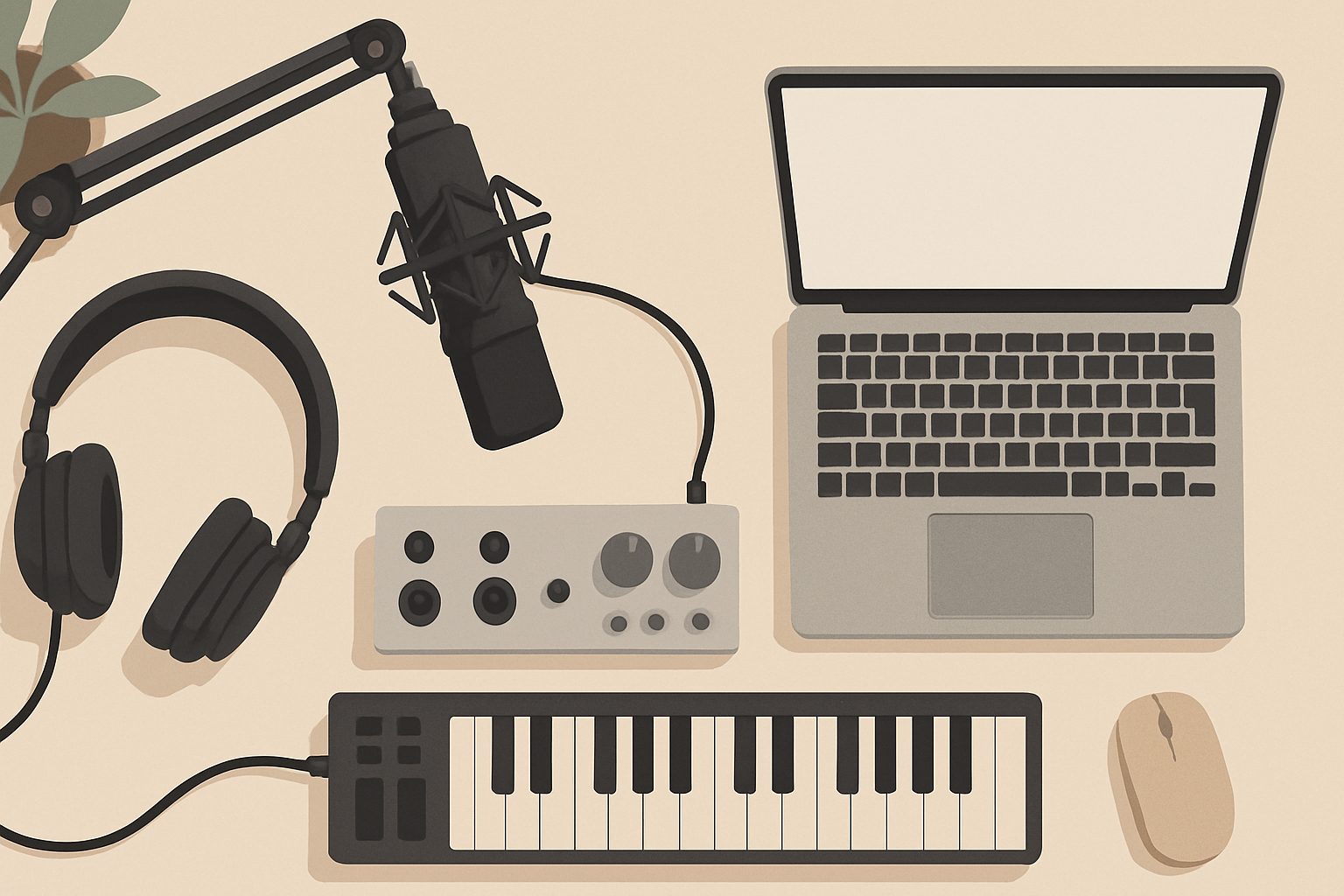
A functioning home studio has five essentials. You need a microphone to capture sound. You need an audio interface to convert that sound into digital format your computer understands. You need headphones for monitoring without feedback. You need a microphone stand and pop filter so you're not holding the mic or eating into the recording. And you need cables that actually work.
Everything else—studio monitors, acoustic panels, fancy preamps—is secondary. Budget recording works because modern interfaces pack decent preamps into cheap boxes, and cheap microphones are infinitely better than they were five years ago.
The real limit under £500 is usually your interface. You'll get one mic preamp, often two input channels. That's fine. Most bedroom recordings use one microphone anyway.
£300 Starter Bundle
This is genuine entry-level but actually usable.
Microphone: Audio-Technica AT2020 or Behringer XM8500 (£60–90). The AT2020 is cardioid and bright, picks up detail. The XM8500 is more forgiving and cheaper. Both work.
Interface: Behringer U-Phoria UMC202HD (£50–70). Two inputs, two outputs, decent preamps, USB powered. Not flashy but solid.
Headphones: OneOdio A71 or similar closed-back monitor headphones (£40–60). They need to be closed-back so you don't hear yourself through the mic. Avoid consumer gaming headsets; the bass is exaggerated.
Accessories: Neewer mic stand + pop filter kit (£20–30). Basic but sturdy.
Cables: USB-A to USB-B (usually included), XLR from mic to interface, 3.5mm aux to headphones.
Total: around £200–250, leaving buffer for cables and a spare pop filter.
This setup records vocal takes, acoustic guitar, and podcast audio without complaint. You'll notice the interface is the cheap bit—the preamp is functional, not transparent—but it works. The AT2020 will outlast most of your other gear.
£400 Mid-Range Setup
Spend the extra money on the interface. It's what colours everything you record.
Microphone: Audio-Technica AT2020 (£80) or Rode NT1 Signature Series (£150–180). The Rode is larger, smoother, and more forgiving of room noise. Worth it if you're recording in a less-than-ideal space.
Interface: Focusrite Scarlett Solo 4th Gen (£90–110) or PreSonus Studio One 24c (£100–120). The Focusrite is the UK standard—three generations deep, reliable, comes with ProTools Intro. The PreSonus has better metering.
Headphones: Audio-Technica ATH-M20x (£50–60) or Beyerdynamic DT-240 Pro (£80–100). Proper monitor headphones now. The Beyerdynamic is more accurate if you're mixing.
Accessories: Neewer boom arm + shock mount + pop filter (£50–70). A boom arm keeps the mic positioned without your arms getting tired. Shock mount isolates vibration.
Total: around £350–400.
This is where you start to feel like you have a "real" setup. The Focusrite preamp is noticeably cleaner than cheaper interfaces. The Rode or AT2020 combination is articulate without being harsh. You can actually hear what you're recording.
£500 Complete Studio
Push into full £500 territory and you have choices. Either upgrade one thing significantly, or balance everything better.
Option A: Mic-forward
- Microphone: Rode Procaster (£180–200) or Audio-Technica AT4040 (£250–280). The Procaster is a dynamic built for speech and vocals, Shure-grade rejection. The AT4040 is a small-diaphragm condenser, more expensive, genuinely professional sound.
- Interface: Focusrite Scarlett 2i2 4th Gen (£120–140)
- Headphones: Beyerdynamic DT-240 Pro (£80–100)
- Accessories: Boom arm, shock mount, pop filter (£50–70)
- Total: around £480–500
Option B: Balanced
- Microphone: Audio-Technica AT2020 or Rode NT1 (£80–180)
- Interface: Audient iD4 (£180–200). Presonus Studio One 24c or Focusrite Scarlett 2i2 4th Gen. The Audient is hand-built in the UK, has a genuinely nice preamp, and comes with a decent bundle of software.
- Headphones: Beyerdynamic DT-240 Pro (£80–100)
- Accessories: Quality boom arm, shock mount, XLR and USB cables (£60–80)
- Total: around £480–500
The balanced approach spreads your budget where it matters. You're not bottlenecked anywhere.
Tips for Getting the Most from Budget Gear
One: treat your recording space. You don't need acoustic foam. Heavy curtains, bookshelves, and soft furnishings scatter reflections enough. Budget studios sound bad because of the room, not the microphone.
Two: close the microphone. Proximity pushes presence and reduces room sound. Most budget recordings fail because people mic from too far away.
Three: check your levels. Keep your input gain low enough that peaks sit around –6 dB. Clipping digital audio is permanent. Quiet recordings are fixable.
Four: use one microphone, one preamp. Don't chase gear before you understand what you have. Most people recording at home don't need two channels active.
What to Compromise On (and What Not To)
Don't compromise: the microphone and interface. These are your signal path. Cheap here = compromised forever.
Do compromise: headphones (closed-back monitor headphones under £100 are fine), stands (budget boom arms work), and cables (buy decent ones, not fancy ones).
Skip entirely: studio monitors until you've got another £300–500. Your headphones are enough to start. Many bedroom studios record entirely in headphones.
Conclusion
A £300–500 setup is genuinely functional. You'll record clear vocals, decent guitars, and usable voiceovers. You won't record with the clarity of a professional studio, but you'll record properly—no distortion, no noise, no excuses about the gear.
The key is buying smart: prioritise the signal path (mic and interface), use the room correctly, and don't chase second microphones or expensive cables. Start recording. Build from there once you know what you actually need.
More options
- Focusrite Scarlett Series Audio Interfaces (Amazon UK)
- Yamaha & Adam Audio Studio Monitors (Amazon UK)
- Audio-Technica & Rode Condenser Microphones (Amazon UK)
- Acoustic Foam Treatment Panels (Amazon UK)
- Arturia & Akai MIDI Keyboards and Controllers (Amazon UK)